What If There Were No Sweeps?

Street Books is celebrating 15 years of nurturing our city’s collective imagination by bringing stories and connection to the streets. We want to reimagine a society that allows everyone a dignified life, we must begin by nurturing our city’s imagination. This year we’re imagining alongside Italo Calvino’s Invisible Cities: a book that questions what a city is, what it’s for. Street Books reaches across the many different Portlands to bridge gaps between housed and unhoused; between alienation and neighborly love. Every library shift is its own emotional city.
Invisible Cities is structured according to eleven themes that capture the many faces of a city. This week we are reflecting on the theme of “Thin Cities” as a metaphor for the issue of campsite “sweeps,” and thinking about what our world could look like without them. For years, studies have shown campsite “sweeps” and other punitive measures preferred by some for their ability to make houselessness temporarily appear to “go away” actually make things worse: research cited in a Street Roots article on death rates among unsheltered Portlanders found that “among homeless people who inject drugs, those who face repeated sweeps are 10% to 22% more likely to die from an overdose than those who don’t. They were also far less likely to obtain medication for opioid use disorder.” According to a 2019 report published by WRAP, "homeless people are three to four times more likely to die prematurely than their housed counterparts, as a result of the sleep loss, stress, displacement and property loss that sweeps cause."
In more than a decade of direct outreach and long term engagement with Portland’s unsheltered houseless residents, our team of street librarians has witnessed firsthand the suffering and inhumanity of life on the streets, and some have experienced it themselves. Moreover, our work has reinforced what we already know to be true: chronic houselessness is caused by systemic injustice, not individual failures. So why do some of the most common approaches to “solving” homelessness punish people, resulting in harmful cycles of instability, hopelessness, and even death?
Despite all that we know about the ineffectiveness of sweeps, these harmful practices are only increasing in our city: Street Roots reports that in the first six months of 2025, an average of 26.6 Portlanders were forcibly displaced. But there are alternatives. This past November, City Councilor Angelita Morillo proposed a budget amendment that would have redirected about $4 million out of the $16 million sweeps budget to supportive services including housing assistance and job placement. Street Books’ own Librarian and Outreach Coordinator Diana Rempe offered powerful testimony at the council meeting in favor of the amendment:
“My name is Diana Rempe, and I work for Street Books—a mobile library serving people living outside and on the margins. We strongly support the Morillo amendment.
For the past fifteen years, we’ve been out on the streets, building relationships as we offer books, reading glasses, harm reduction and other survival supplies. This vantage point has given our organization a close-up view of the suffering and displacement caused by sweeps, of the daily trauma inflicted on our library patrons as they struggle to meet their basic needs, and of the ways that sweeps exacerbate crisis and instability.
In our daily work on the streets we see rapid response workers moving from place to place all day long, indiscriminately throwing things into garbage bags as people struggle to gather what they can. We hear the stories of the things people have lost—IDs, medications, the last picture of their dead child.
Many people will testify that this policy is about trash, but that is not true. This policy is about displacement—about moving people out of sight to appease the complaints of those who do not want to look at the evidence of our society’s decision that certain people do not deserve to have their most basic needs met and must live without shelter on the sidewalks, doorways, and streets of our city.
If you are truly concerned about biohazards, work to provide easy access to bathrooms and support meaningful, proven harm reduction programs.
If you are truly concerned about garbage and jobs, ramp up existing programs like those offered by Groundscore–creating many more low-barrier jobs as you do so.
If you are truly concerned about helping people live somewhere other than the streets, provide a range of real housing options—with an emphasis on permanent supportive housing.
As I conclude I will leave you with the story of B, who appeared in her wheelchair at our shift in NW—She had just been swept and talked about having to leave everything because there was no way to carry it on her wheelchair. She said, crying, “I feel like human garbage.”
We have to stop treating human beings like trash.
We urge you to support this amendment and continue the council’s important work to meaningfully and positively affect people’s lives by focusing on housing, food assistance, and immigrant assistance, instead of sweeping and displacing people day after day.”
What if there were no sweeps? What kind of approaches would really make a lasting difference? A report on effective housing solutions published by Welcome Home Coalition (of which Street Books is a proud member!) found that “91% of respondents said they would move into housing if they could afford it” and identified approaches including “rental assistance, supportive services like case management or
peer support, and the freedom to live with loved ones.” A statewide pilot program providing cash assistance to houseless youth was shown to be successful, with over 90% of participants in stable housing by the end of the project’s first phase. And many of the nation’s leading advocacy groups support the proposed Right to Rest legislation, which was developed with input from people with lived experience of houselessness to determine the most effective and humane approach to addressing unsheltered houselessness in the United States.
Can you imagine a world without sweeps? At Street Books we believe the first step towards a better world is honoring our shared humanity, dignity, and capacity for collective imagination and transformation. Our street library and outreach work is a powerful tool for building trust and community where it’s most needed. Please help support Street Books by donating to our winter campaign so we can continue to show up all year long to meet people where they are, literally.
Partner Appreciation:
Ground Score Association
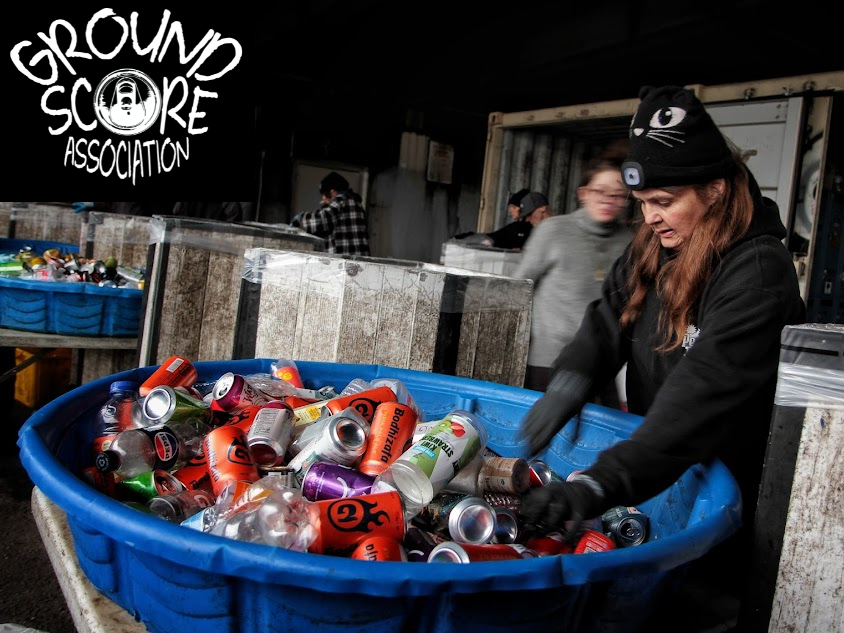
In our revolution to nurture our city’s collective imagination, Street Books has been fortunate to work alongside our partner association Ground Score. We share a foundation of meeting people where they are at, and work together to build a more socially aware community despite the disposability culture we exist within.
Ground Score is worker led, worker run, and self-described as radically inclusive. They have created low barrier jobs through the GLITTER Program, jobs in litter and tentside waste collection, and through The People’s Depot, a container redemption center operated by and for canners. Their clothing waste distribution with Hygiene4All, and the Reuse & Repair Program that reimagines and repurposes textiles to create handmade products, diverts waste into upcycling. Ground Score’s First Thursday Art Gallery also showcases handmade art and crafts sourced from this transformative upcycling process. This month’s art show, DISTRESSED, presented in partnership with Rose Haven, utilizes upcycled denim as a creative medium.
Street Books sets up the bike library on Wednesdays at Ground Score as well as monthly for the Community Wellness Fair. At the fair, you’ll find us alongside community like The Everly Project, FREE GEEK and Rose Haven. With the Ground Score Association, we have shared the mic for memorials, encouraged one another to stay tender, and witnessed countless acts of resilience, and together we will continue to find value in what has been thrown away.